
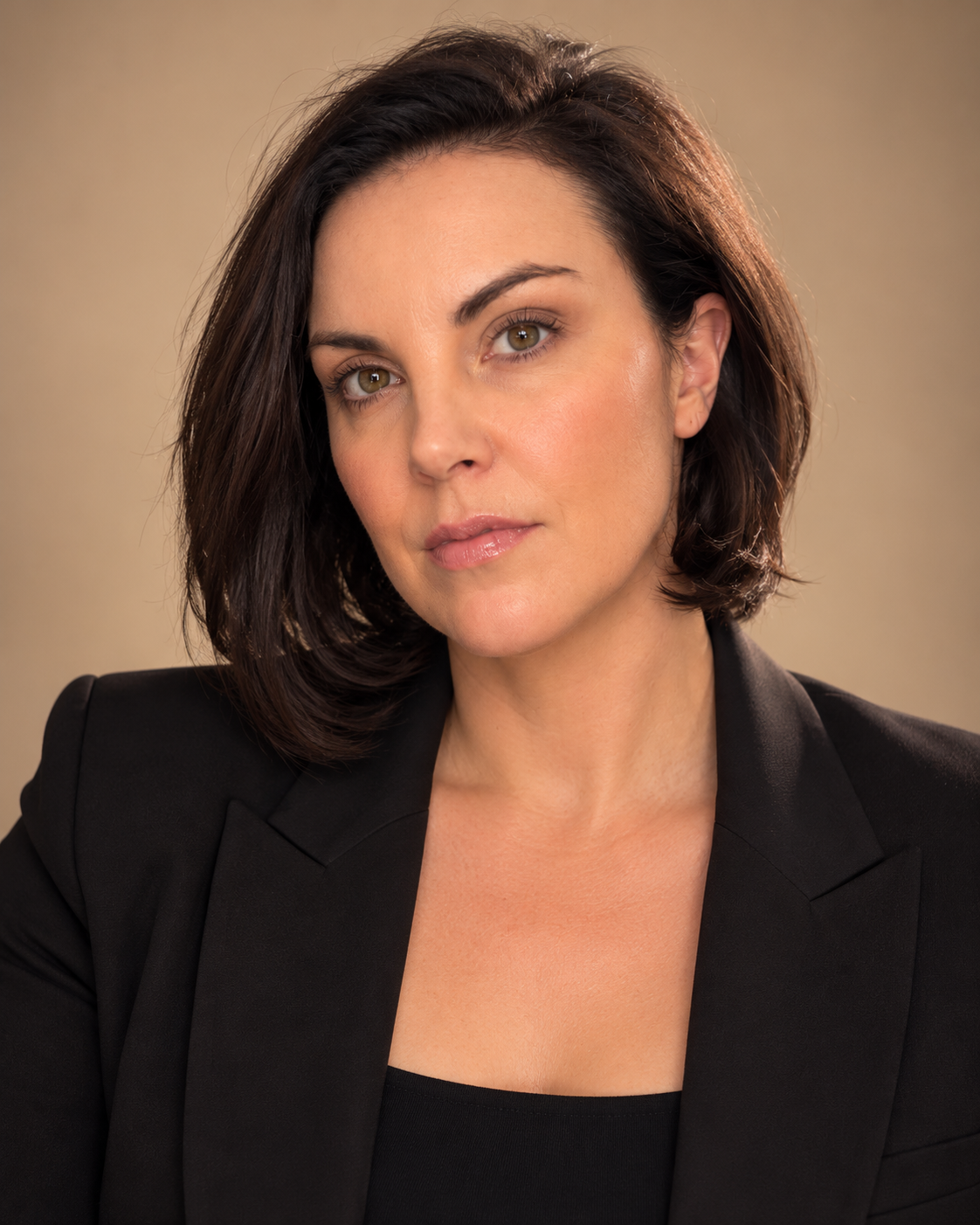
I'm Sarah.
And for a long time, I was very good at being the woman everyone needed.
I was independent, ambitious, capable and reasonably good at dealing with whatever life decided to throw at me. I'd worked hard, built a life I was proud of and become someone people could depend on. I had responsibilities, goals and plenty of reasons to be grateful for what I had.
From the outside, everything looked perfectly fine. And for the most part, it was.
But somewhere along the way, I started wondering whether the life I'd become so good at managing was actually the life I wanted.
Not because I wanted to throw everything away and start again. I just couldn't shake the feeling that I'd spent years making decisions based on what needed to be done, what other people expected and what seemed like the sensible thing to do.
And I'd become so accustomed to living that way that I rarely stopped to question it.
The questions I couldn't ignore.
I don't think these realisations always arrive in some enormous, life-changing moment. Sometimes they build quietly over years, until something that once felt completely normal starts to feel uncomfortable.
For me, there was a holiday in Bali that gave me enough distance from my everyday life to start recognising things I'd been ignoring. I didn't come home with a grand plan or some extraordinary new understanding of myself. I came home knowing that something needed to change, even if I couldn't quite explain what that something was.
A couple of weeks later, I was sitting at my desk on an ordinary Tuesday when I started crying. Completely out of nowhere, or at least that's how it felt at the time. I'd spent years being the woman who could put her feelings aside and get on with whatever needed doing. Suddenly, I couldn't.
It was confronting, largely because I was so accustomed to being in control.
Looking back, I don't think that Tuesday was the beginning of anything. I think it was the point where I could no longer ignore what had been building for a long time.
And once I'd acknowledged that, pretending everything was fine became considerably more difficult.
Being capable comes with its own complications.
I'd spent most of my adult life being the person who could handle things. If there was a problem, I'd find a solution. If something needed doing, I'd get it done. If someone needed help, I'd usually find a way to make myself available.
I was proud of that. I still am.
But I'd also developed a habit of taking responsibility for things that weren't necessarily mine to carry. I'd become very good at accommodating other people, managing expectations and putting my own needs somewhere near the bottom of the list.
The uncomfortable part was recognising that I wasn't simply a victim of everyone else's expectations. Sometimes I was the person reinforcing them.
I'd say yes when I wanted to say no. I'd take things on rather than risk disappointing someone. I'd tell myself something wasn't worth addressing, then wonder why I was frustrated when it happened again.
And because those behaviours had become so familiar, I'd stopped noticing them.
It wasn't enough to decide that other people needed to change. I had to start examining the part I was playing in my own life.
That was considerably less enjoyable.
(Unfortunately, also considerably more useful.)
Why I wrote Too Much For Them.
I started writing because I wanted to understand what had happened. Not just in my own life, but in the lives of so many women who seemed to be asking themselves similar questions.
Women who had spent decades building careers, raising families, maintaining relationships, supporting other people and doing what they believed was expected of them.
Women who weren't necessarily unhappy, but who were starting to wonder whether there was more to life than being exceptionally good at managing it.
I became interested in why we develop certain behaviours, how our experiences influence the way we see ourselves and why we continue repeating patterns long after we've recognised they aren't working.
Because telling someone to set boundaries, stop people-pleasing or put themselves first is easy.
Actually understanding why those things feel so difficult is another matter.
That became the foundation of Too Much For Them.
The more I wrote, the more I realised I didn't want the book to simply describe the problem. I wanted to explore what we could actually do with that understanding.
And that's where the SHIFT Method began.
What I'm doing now.
Today, I'm building my work around writing, speaking and the conversations I believe more women need to be having.
Conversations about identity, ambition, responsibility, relationships, personal standards and the expectations we inherit without necessarily questioning them.
Through Too Much For Them, the SHIFT Method and my YouTube channel, I explore the things that influence how we live and why meaningful change is often considerably more complicated than simply deciding we want something different.
I'm not interested in telling women they need to reinvent themselves every time they become dissatisfied with something.
Nor do I believe that every uncomfortable feeling is a sign that you need to quit your job, leave your relationship or move to the other side of the country.
Sometimes the change you need is enormous.
Sometimes it's a conversation you've been avoiding, a responsibility you need to stop accepting or a decision you've been putting off because you're worried about how someone else might react.
The important part is learning to recognise the difference.
A few things I believe.
You can be grateful for the life you've built and still want something different.
I think women spend far too much time feeling guilty for wanting more, particularly when they already have things they once worked incredibly hard to achieve. Somewhere along the way, we've confused gratitude with obligation. As though appreciating what you have means you're no longer entitled to question whether it's what you want. You can love your family, appreciate your circumstances, be proud of what you've accomplished and still recognise that something needs to change. Wanting more doesn't automatically make you ungrateful. Sometimes it simply means you've grown, your priorities have changed or you've finally started paying attention to what matters to you.
Being capable of handling something doesn't automatically make it your responsibility.
This one took me longer to understand than I'd care to admit. When you're the person who can usually figure things out, people naturally start coming to you. And when you've built part of your identity around being dependable, it's surprisingly easy to keep saying yes. Eventually, you become responsible for things nobody actually asked you to take on. The problem isn't necessarily that everyone expects too much of you. Sometimes it's that you've spent years demonstrating that you'll take care of everything, regardless of whether you should. Just because you can carry something doesn't mean it belongs to you.
You can love people without making yourself responsible for their happiness.
There's a difference between caring about someone and constantly managing their emotional experience. You can be considerate, supportive and loving without making every decision based on how someone else might react. People are allowed to be disappointed. They're allowed to disagree with you, dislike your decisions or wish you'd done something differently. That doesn't automatically mean you've done anything wrong. Relationships require compromise, but compromise shouldn't consistently involve one person abandoning what matters to them so everyone else can remain comfortable.
Understanding why you behave a certain way doesn't excuse you from doing something about it.
I'm a big believer in understanding the experiences and beliefs that shape our behaviour. There are reasons we develop certain habits, why we respond to situations the way we do and why some patterns are incredibly difficult to break. But there's a point where understanding becomes another way of avoiding change. You can spend years analysing why you struggle to say no, why you avoid confrontation or why you keep accepting situations that make you unhappy. That awareness matters, but eventually you have to decide what you're going to do with it. Your past might explain your behaviour. It doesn't have to dictate every decision you make from here.
Being the woman everyone can depend on means very little if you're the one person who can never depend on yourself.
We talk a lot about keeping our promises to other people. We take commitments seriously, rearrange our schedules and find ways to show up even when it's inconvenient. Yet the promises we make to ourselves are often the first ones we abandon. We'll cancel our own plans, postpone our goals and convince ourselves that what we want can wait until everything else is taken care of. Except everything else is rarely taken care of. There's always another responsibility, another person who needs something or another perfectly reasonable excuse to put yourself last. At some point, you have to start treating your own commitments as though they matter too.
You don't need to wait until your life falls apart before you're allowed to change it.
I think this is one of the biggest misconceptions we have about making significant changes. We assume there needs to be some extraordinary event that justifies doing things differently. A relationship has to become unbearable. A career has to make us miserable. We have to reach a point where continuing as we are is no longer possible. But why? Why do we need everything to become terrible before we're willing to acknowledge that something isn't right? Sometimes nothing is particularly wrong. Sometimes you've simply reached a point where what once worked for you no longer does. That's a perfectly reasonable thing to recognise.
You are allowed to change your mind about the life you thought you wanted.
The things you wanted at twenty-five might not be the things you want at forty-five. Your ambitions, priorities, relationships and understanding of yourself will change as you experience more of life. Yet we often hold ourselves to decisions made by versions of ourselves who had considerably less experience and very different circumstances. Changing your mind doesn't mean those earlier decisions were mistakes. They might have been exactly right for who you were at the time. But you don't owe your younger self a lifetime commitment to every plan she made.
And perhaps most importantly, I believe you have to be willing to question yourself.
It's easy to talk about what other people should do differently. It's considerably harder to recognise the ways we contribute to circumstances we're unhappy with. The boundaries we don't communicate. The conversations we avoid. The expectations we continue meeting while quietly resenting them. Not everything that happens to us is within our control, and I don't believe in pretending otherwise. But where we do have choices, we have to be prepared to acknowledge them. Because there's very little point wanting your life to change if you're unwilling to examine the part you play in how you're living it.
I
So, where does that leave us?
I suppose that's what all of this comes down to. I'm not here to tell you how to live your life, what decisions you should make or who you should become. I've spent enough time questioning my own choices to know that nobody else can answer those questions for you. And I certainly don't believe that turning forty, fifty or sixty means you suddenly need to reinvent yourself or start everything again.
What I do believe is that we owe it to ourselves to occasionally stop and question what we're doing. To look at the lives we've built, the expectations we've accepted and the things we keep putting off because there's always something or someone else that needs our attention. Not because everything is wrong, but because we deserve to have some say in what happens next.
That's what my writing, my speaking and Too Much For Them are really about. Having conversations that make us think, challenging some of the things we've accepted without question and recognising that we're allowed to make different choices, even when the lives we've built look perfectly fine on paper.
And if something you've read here has made you stop and question even one thing about your own life, then perhaps we've already found something worth talking about.
Let's keep the conversation going.
There's plenty more to explore, and I'd love for you to be part of it. Whether that's through the book, the SHIFT Method or the conversations I'm having over on YouTube, I hope you'll find something that makes you think, question or look at your own circumstances a little differently.